Springs · Dickson Hill
Garage Door Roller Replacement in Dickson Hill
A roller near the top corner is riding on the lip of the track rather than inside it, and the section above leans back a little more each week. The door still moves, but it looks one bump away from coming out altogether.
Garage Door Roller Replacement
In plain words
Winter is hard on rollers. Slush carried in on the tires freezes in the foot of the track, wheels skid across the ice instead of turning and wear flat spots, and salt eats into steel stems and bearings at the lowest positions first. By spring a door that was merely a little noisy is juddering. Roller replacement after a hard season puts fresh wheels and bearings under the door, and the technician clears the salt from the lower track and inspects the bottom brackets and cables that share the same wet corner, so the door heads into the next winter in better shape.
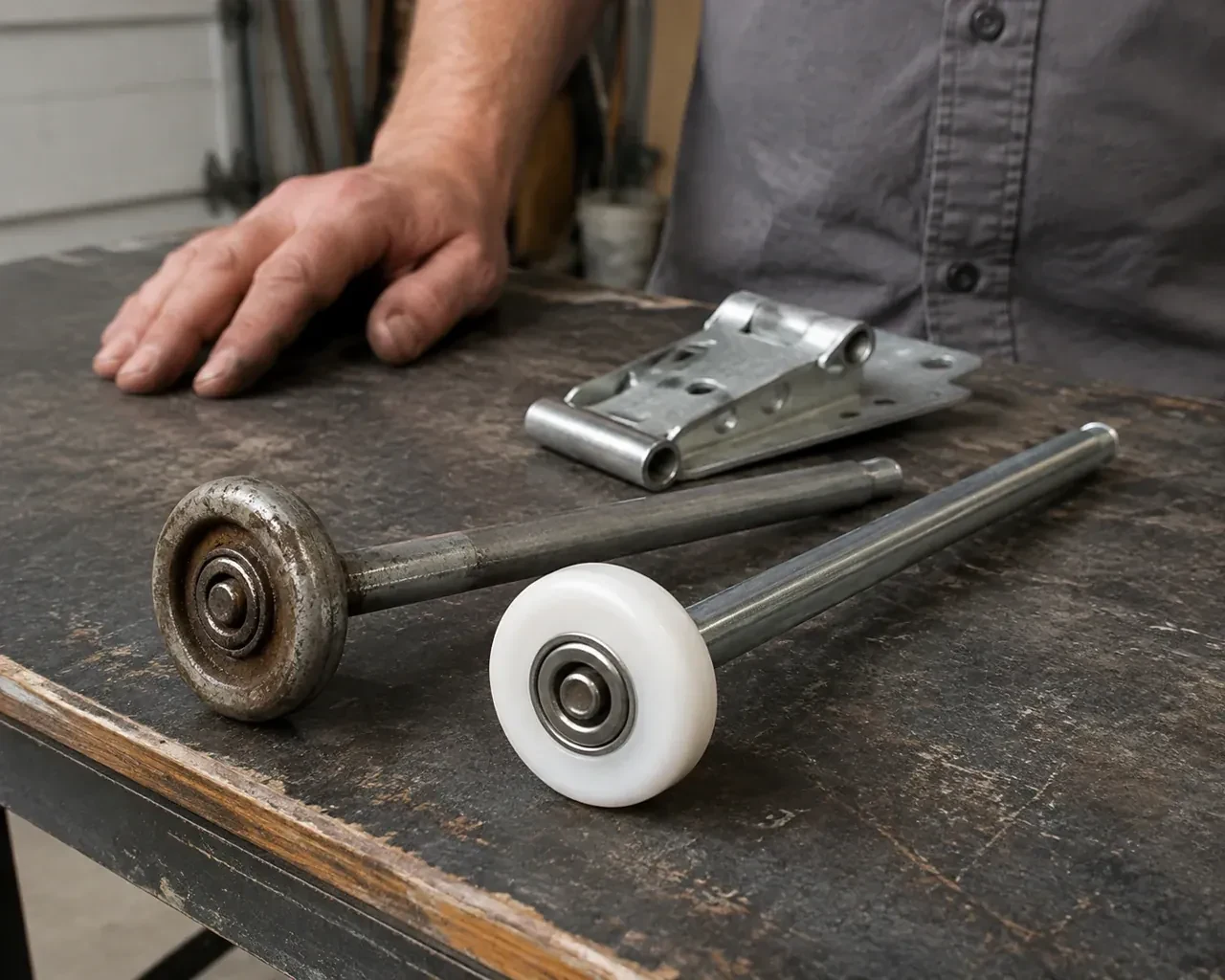
How the visit goesOne of the little wheels along the edge of the door has a chunk missing, another sits crooked in its hinge, and there is a fine grey dust on the floor under the track where plastic has been wearing away.
Dickson Hill
How the visit goes
The hardware the rollers live in
A roller is only as good as the bracket that holds it. The technician inspects every hinge for cracks at the knuckle, elongated holes and loose or missing fasteners, checks that the top fixtures still adjust and hold their setting, and looks over the bottom brackets for rust, deformation and the condition of the cable attachment. Jamb brackets and the flag brackets at the top of the vertical track are checked for movement. A door moves more than a thousand times a year and that vibration loosens bolts, so a hinge that has been working loose is often the reason a wheel wore crooked, and it is refastened or replaced as part of the same visit.
The bottom rollers and the cable brackets
The lowest rollers live in the bottom brackets, and those brackets also anchor the lifting cables, which means they carry the counterbalance load whenever the door is closed. This is the one roller position that is never approached casually. Depending on the door, the technician either exchanges the roller while the bracket stays fastened and the cable stays put, or first takes the spring tension off with winding bars so the bracket can be unbolted and inspected. Either way the bracket, the cable end and the fastening into the section are examined, and a corroded or bent bracket is replaced while the door is already secured.
An opener with less to carry
With smooth rollers under the door, the opener goes back to its intended job of guiding a balanced door rather than hauling a rough one. The technician will have confirmed the force settings and the reversal against a test block before leaving, and it is worth repeating the reversal check yourself each month: lay a 1-1/2 inch block, such as a scrap of two-by-four laid flat, in the door's path and close it; the door should reverse on contact. If the opener ever begins straining or reversing partway again, mention it at the next visit, since it is often the earliest sign of hardware wear.
Garage Door Roller Replacement
In the van
- 1-1/2 inch reversal test block
- Garage door lubricant
- Jamb bracket fasteners
- Three-inch rollers for commercial track
- Track clamps or locking pliers
What affects the quote
Same fees day, night or weekend
1Track alignment and repair
Realigning jamb brackets, straightening a dented lip or replacing a damaged length of track is separate from the roller work and quoted as such when the inspection finds it.
2Relieving spring tension for the bottom rollers
When the bottom brackets have to be unbolted, the technician takes the spring load off first with winding bars, skilled extra work that is included in the figure for that position.
3Salt and rust in the lower track
A track full of brine, scale and grit needs cleaning before new wheels go in, and heavy corrosion can extend to the brackets and cables, adding to the scope of the visit.
Garage Door Roller Replacement: questions
Why does the door shake as it rounds the curve of the track?
The curve is where each roller changes direction under load, so it exposes wear that straight travel hides. A wheel worn oval or flat-spotted bumps as it turns the corner, a wobbling stem lets the section lean back as it enters the horizontal run, and a track whose radius has been knocked out of shape pinches or drops the wheel for an instant. Fresh rollers of the right size in a track that has been checked for shape and spacing usually take the shudder away.
What does stem length mean and why does it matter?
The stem is the steel shaft that passes through the hinge or fixture and carries the wheel. Most residential doors use a four-inch stem through a single hinge. Heavier doors have two hinges stacked at the ends of each section, and those need a seven- or ten-inch stem so the shaft reaches through both. A short stem in a double hinge sits loose, lets the wheel lean, and is a common reason a door leaves its track. The technician counts the hinges before choosing the set.
Do nylon rollers need lubricating?
The nylon tire itself needs none; spraying it or the track only collects dust that grinds the wheel. The hinge knuckles and stems where they turn benefit from a light coat of garage door lubricant once or twice a year, worked in by running the door. The ball bearings themselves are lubricated only where the roller's own maker calls for it, since some nylon rollers should not be greased there. Rollers with sealed bearings come greased from the factory and need only a wipe and a look.
Springs & Hardware
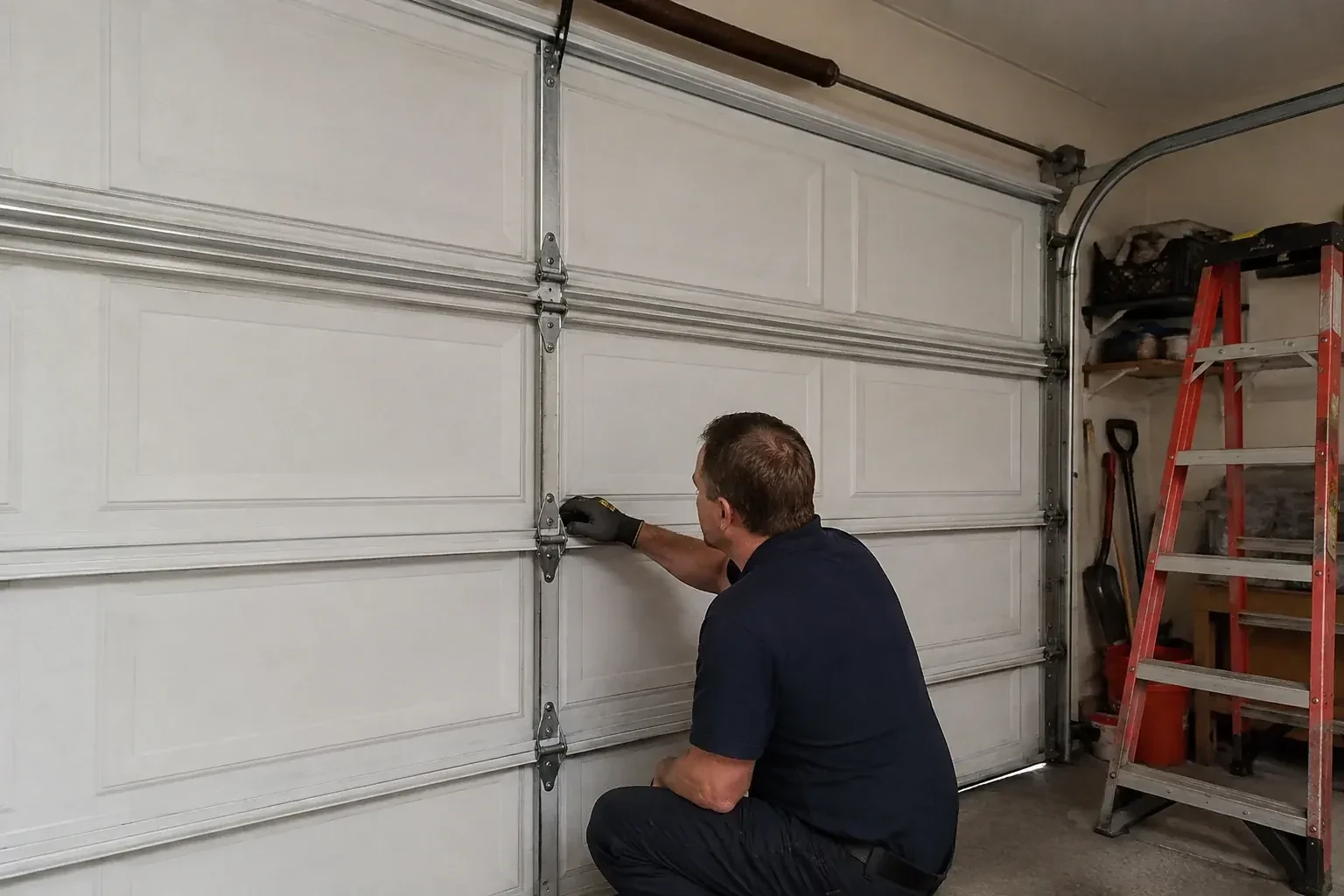
- Garage Door Track Repair or ReplacementYou bought the house with a door that sticks near the top of its travel.
- Garage Door Cable ReplacementYour older door has springs along the tracks, and one cable has slipped off its pulley and dangles…
- Torsion Spring ReplacementLooking up at the coil above the door, you can see a clean split with a gap of several centimetres…
Garage Door Roller Replacement near you
The garage door services we bring to Dickson Hill fall into four groups: repair and maintenance for doors that are sticking or noisy; springs and lifting hardware; openers, remotes and access; and new door installation or upgrade for homes and businesses that are ready for a change.